
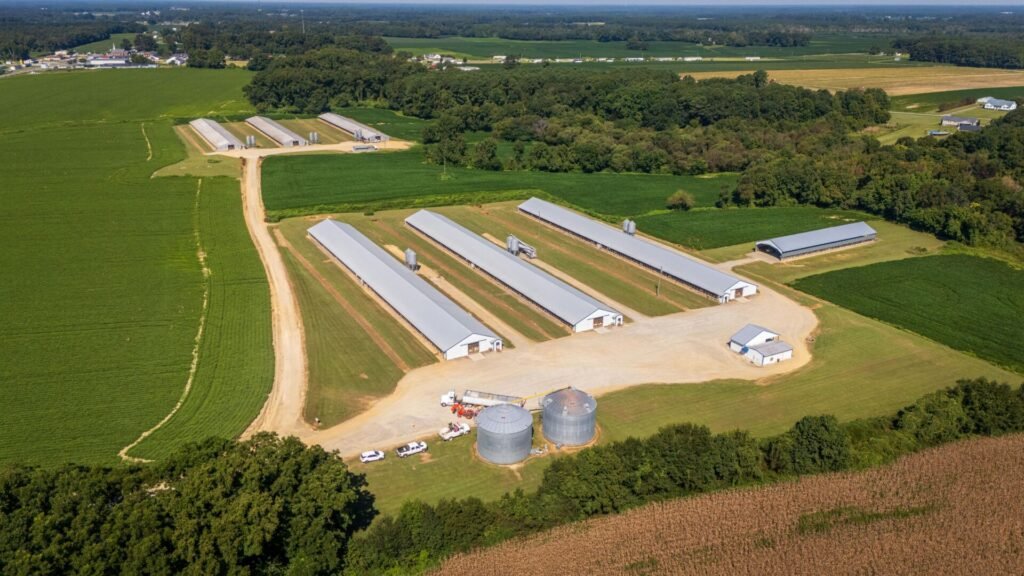
5 Critical Pitfalls in Greenfield Poultry Site Planning
When expanding or launching a greenfield farm project, planning is often treated as an administrative hurdle rather than an engineering discipline. In the Philippines, where monsoon rains, high ambient humidity, and typhoons are recurring factors, layout mistakes can severely limit a farm’s ultimate performance.
1. Disregarding Wind and Sun Orientation
Tunnel-ventilated houses rely on stable negative pressure and high airspeed to create wind chill. Placing a house parallel to prevailing storm winds or orienting the side-walls directly towards the harsh afternoon sun increases thermal load, straining cooling pads and ventilation systems unnecessarily.
2. Underestimating Biosecurity Buffers
Proper farm layouts enforce physical barriers between clean zones (flock areas, feed storage) and dirty zones (manure storage, load-out areas). If logistics roads cross paths, cross-contamination is nearly inevitable. Site layouts must design one-way flow patterns for vehicles and staff.
“A farm’s layout is its first line of defense. Equipment can only compensate so much for a fundamentally flawed layout.”
3. Insufficient Drainage and Soil Compaction
Heavy rainfall can quickly erode foundations or flood pits. Sites must be graded properly with dedicated storm-water drainage canals sized for peak precipitation data. Soil compaction testing is crucial to ensure prefabricated steel structures do not settle unevenly over time.